Hey there, fellow crusher operators, maintenance managers, and anyone who’s ever stared at a worn jaw plate and wondered “how much is this gonna set me back?” If you’ve been scrolling around trying to pin down the price range for jaw plates, you’re not alone. As someone who’s been supplying jaw plates for over a decade now—workin’ with quarries, mining crews, and demolition teams every week—I can tell you it’s not a one-size-fits-all number. But let’s break this down like we would in a shop, no fancy jargon, no hidden tricks. Jaw Plates

First off, let’s get what a jaw plate actually does straight, quick: it’s that tough, curved metal liner that lines the jaws of your primary crusher, crunching rocks into smaller pieces. The price tag? It depends on way more than just “metal”—that’s where most people get tripped up. Let’s start with the basics: entry-level, standard carbon steel jaw plates. These are the ones you’ll find in smaller, lighter-duty crushers—think a 10×20 model for a hobby quarry, a demolition crew doin’ small concrete jobs. These are basic, designed for moderate use, not heavy rock like granite or basalt.
I’m gonna keep it real: for standard carbon steel jaw plates, you’re lookin’ at roughly $200 to $800 per set (a set is two plates: fixed and swing, right? Almost everyone forgets you need both). Wait, why such a big gap? Size, duh. A tiny 10×20 crusher’s jaws are small—plates might be 10 inches tall, 20 inches wide. A set like that’s gonna be on the lower end, $200 to $400. But if you’re runnin’ a bigger 20×30 crusher for medium-duty aggregate, that steel plate’s bigger, thicker, costs more to machine—so that’s $500 to $800. These are great if you’re runnin’ soft to medium rock, like limestone or recycled concrete. They wear out in a few months, but they’re cheap upfront, so they’re perfect for crews that don’t wanna drop a ton on parts right away.
But here’s where most of my regulars upgrade: high manganese steel jaw plates. This is the workhorse stuff for real heavy-duty work—granite, basalt, hard ore, the stuff that chews through standard steel plates. Manganese steel (that’s Hadfield steel, if you wanna get technical) is tough, and the more it gets banged around, the harder it gets—so it lasts way longer. But it’s more expensive upfront. Now, don’t get me wrong: it’s worth it if you’re runnin’ 10+ hours a day, five days a week.
High manganese jaw plates’ price range? Let’s be honest, it’s $800 to $2,500 per set. Again, size matters a ton. A small 12×30 crusher manganese set is around $800 to $1,200. A massive 42×48 primary crusher (the kind that handles 500 tons of rock an hour) will have jaw plates that are huge—thick, heavy, custom cast—so that’s $2,000 to $2,500. Wait, but I hear you thinkin’—“That’s way more than the standard steel, why bother?” Let’s do the math: a standard plate might last 3 months, cost $600. So over a year, that’s four sets, $2,400. The manganese plate lasts 12 months, $1,500. You save a grand, no downtime swapin’ parts every quarter. That’s the math that makes sense for most full-time operations.
But wait, there’s more out there now—alloy steel and specialty wear plates. These are for the people who run the absolute hardest material, or who run their crushers 24/7, no time for even monthly swaps. Alloy steel is a mix of manganese plus other elements, like chromium or molybdenum, for extra hardness and longer wear. Then there’s the ceramic-reinforced plates—yeah, that’s a thing, tiny ceramic bits embedded in the metal for crazy abrasion resistance. These aren’t cheap, let’s be clear.
Specialty alloy and ceramic jaw plates? Their price range is $2,200 all the way up to $5,000+ per set. Let’s break that down. A medium crusher runnin’ granite 10 hours a day with alloy plates: that’s $2,200 to $3,200. A big primary crusher, runnin’ hard iron ore, with ceramic plates? Yeah, that’s $4,000 to $5,500. These last 18 months to two years sometimes, so again, the cost per hour of operation is way lower, even if the upfront price is steep. I had a mining client last year who switched to ceramic plates on their 44×60 crusher—they went from changin’ plates every 6 weeks to every 18 months. That’s way less downtime, no rush orders for parts, no lost production from swapping.
Now, let’s talk about the stuff that screws people up when they’re shoppin’—the hidden factors that make the price jump without you seein’ ’em at first. First, size of the crusher, obviously. I can’t stress that enough: a jaw plate for a 10×16 crusher is not the same as a 48×60, and the price scales way more than just inches. Then there’s the design: some plates are smooth, some have deep corrugations, some are custom shaped for your specific crusher model. A lot of people don’t realize that off-brand crushers might need custom plates, which add 15-20% to the price—no standard mold, so the foundry has to make a new one.
Then there’s delivery. If you need plates in a hurry—like, your crusher just went down on a Friday, and you need parts by Monday—expect a 30-50% rush fee. Standard lead time is 1-2 weeks for most plates, rush is 3-5 days, but it adds up. Also, quantity: if you’re buyin’ one set, that’s the retail price. If you’re a quarry that buys 4 sets a year, 10 sets, you get a bulk discount. I give regular customers up to 15% off when they place a standing order—makes sense for both of us, steady work for me, lower cost for them.
Wait, also: are you buyin’ just the plates, or do you need spacers, bolts, or spare parts? A lot of suppliers won’t tell you that the basic price is just the two plates, but you’ll need bolts ($50-$100) and spacers ($100-$200) to install ’em. That’s a common mistake—people budget $800 for plates, then end up spendin’ $1,100 total. I always tell folks to ask for a full quote with all installation parts, no surprises.
Let’s get real about what you get for the price, too. A lot of cheap jaw plates on Amazon or random online marketplaces—those are usually thin, low-grade steel, cast with flaws. I’ve had customers come to me after buyin’ a $150 “manganese” set for their small crusher, and they wore out in two weeks. That’s not a deal, that’s a waste of money. The cheap stuff is often made from recycled metal that’s not properly heat-treated—so it’s not tough, it breaks easy. When you’re runnin’ a crusher, downtime costs way more than the parts. If your crusher is down for a day, you’re losin’ thousands in production. So skimpin’ on jaw plates almost always backfires.
Another point: application. If you’re crushin’ recycled asphalt, that’s abrasive, but not super hard—standard steel works, no need for manganese. But if you’re crushin’ basalt, which is like crushin’ glass, you need manganese or alloy. I’ve had a demolition crew buy manganese plates for asphalt, they ended up losin’ money because the plates lasted longer than they needed to, and they paid more upfront. So it’s matchin’ the plate to your job, not just buyin’ the most expensive one.
What about used jaw plates? Some people go that route to save cash, but let’s be honest: most used plates are worn out. You might find a set for $100-$300, but if they’re more than 50% worn, they’re not gonna work right—they’ll cause uneven crushing, damage your crusher’s frame, and you’ll end up spendin’ more on repairs. The only time I’d recommend used is if you have a friend’s old crusher that’s the exact same model, and the plates are barely worn—even then, I’d have a machinist check the thickness first. I don’t sell used plates, but I tell folks to be super careful with that.
Let’s wrap this up with quick, easy numbers to remember, based on what most my customers actually pay:
- Standard carbon steel (soft/medium rock, small to medium crushers): $200 – $800 per set
- High manganese steel (heavy-duty, hard rock): $800 – $2,500 per set
- Specialty alloy/ceramic (24/7 operation, super hard rock): $2,200 – $5,500+ per set
But here’s the thing: the best way to get an accurate price is to tell us a few details: what model crusher you have, what material you’re crushin’, how many hours a day you run it, and if you need any extra parts. I’ve had guys tell me “I have a 20×30 crusher crushin’ limestone 8 hours a day” and I can send a quote right away, no guesswork.
I know, I know—no one likes talkin’ parts prices, but gettin’ the right jaw plate at the right price saves you so much headache. If you’re lookin’ to replace your plates, or wanna switch to a longer-lasting type, hit us up. We’ll walk you through what’s best for your operation, no pressure, no hidden fees. Just give us the details, we’ll send a clear quote, and get you parts fast so your crusher’s back up and runnin’.
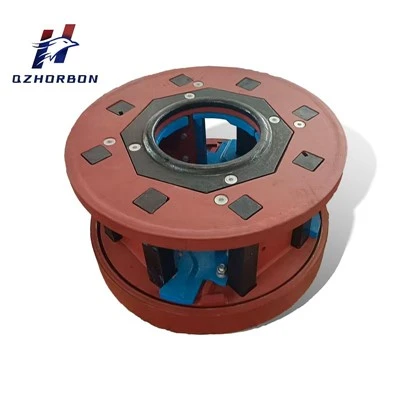
Don’t waste time shoppin’ random sites that don’t know what they’re sellin’—we’ve got the plates that work, at prices that make sense. Reach out anytime.
Crusher Pitman References
- Mining and Aggregates Safety and Health Administration. (2022). Wear Parts Selection Guidelines for Primary Jaw Crushers. National Institute for Occupational Safety and Health.
- Metso Outotec. (2021). Jaw Plate Cost Optimization: Balancing Upfront Price and Service Life. Industry Technical Paper.
- The Society for Manufacturing Engineers. (2020). Casting Materials for Heavy Wear Applications: Manganese vs. Alloy Steels. SME Technical Brief.
- Quarry Management Magazine. (2023). Cost Analysis of Jaw Plate Replacement Schedules for Mid-Sized Aggregate Operations. Industry Case Study.
- Crusher Parts Association. (2022). Buyer’s Guide to Jaw Plate Specifications and Pricing. Trade Association Publication.
Quzhou Horbon Mining Parts Co., Ltd.
Address: No.8 Nanshan Road, Qujiang District, Quzhou City, Zhejiang Province, China
E-mail: horbonmining@gmail.com
WebSite: https://www.horbonmachinery.com/
