Hey everyone, Board Edger
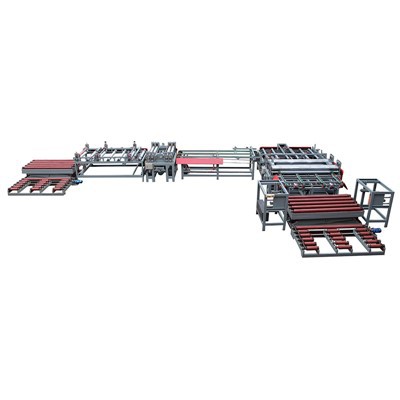
Quick show of hands—if you’ve ever stared down a stack of rough sawn boards, scratched your head, and wondered, “Wait, can my board edger even handle boards with different grain directions?” I see you. As someone who’s been on the board edger supplier grind for the past 12 years, I get this question nonstop. It’s one of those “it seems like it should be simple, but it’s actually way more nuanced” things, right? Let’s break this down like we’re chatting in the shop, not presenting at a boring industry conference.
First off, let’s keep everyone on the same page. A board edger (for the uninitiated) is that machine that takes a big, rough, uneven plank and trims the waney edges off it, splitting it into narrower, usable boards with straight sides—super key for anything from furniture to flooring to structural lumber. Now, grain direction: that’s the tiny lines running along the board, basically the “direction” the tree grew when it was standing. Most boards are straight-grained (like a 2×4 you’d get at Home Depot) but sometimes you get cupped grain, cross grain, even that wonky spiral grain from trees that grew on a hill. The big question is: can the edger handle both straight-grained boards and those weird, grain-warped ones in the same run?
Spoiler alert—no, it’s not a one-size-fits-all yes, but it’s way more doable than most people think, and a lot depends on what kind of edger you’re rocking. Let’s start with the old-school ones, because that’s what most small to mid-sized mills still run. The traditional twin-blade board edger—you know, the ones with two fixed blades that you adjust manually every time the grain shifts. If you’ve got a straight-grained board coming through, that’s easy peasy, blades set it once, it trims smooth every time. But cross-grained? Like, when the grain runs diagonally across the board instead of parallel to the length? Those are a pain. The blade will catch, tear the grain, leave a rough edge, or even throw the whole board off course if you’re not careful. I’ve seen guys run cross-grained 1x6s through an old fixed-blade edger and end up with a board that looked like a dog chewed one edge. That’s the mistake a lot of new mill owners make—they buy a used edger without asking what it’s actually rated for, then get stuck with garbage cuts when their stock has mixed grain.
But here’s where the good stuff comes in: the upgraded edgers that most of our customers run now—variable-speed, with adjustable blade positions, even some with grain direction sensors. Wait, I know what you’re thinking: “Sensors? That sounds fancy.” But no, it’s not rocket science. The sensor just reads the grain pattern as the board feeds in, and tweaks the blade pressure, speed, and angle mid-cut to match. Let’s say you’ve got a stack with half straight-grained and half cross-grained boards. You just set the machine to “auto-adjust for mixed grain” (it’s a toggle switch, like turning on your phone’s flashlight) and it handles both without you lifting a finger. Our lead tech, Jake, runs tests on this all the time. Last month we had a customer in Ohio with a mill that does custom reclaimed barn wood—super mixed grain, some from old oaks with spiral grain, some from pine with straight grain. Before they got our upgraded edger, they were having to pull cross-grained boards out mid-run and edge them by hand, which ate up 3 hours a day. Now? They just feed the whole stack in, hit start, and come back to perfectly edged boards. No more hand work, no more wasted material. That’s the real win here.
Wait, but let’s get into the science stuff because I know some of you gearheads want the details. When you’re edging a board, the blade is shearing wood fibers. If the grain is parallel to the cut (straight grain), the blade just glides through clean—like cutting a stick of butter. If the grain is perpendicular or diagonal (cross grain), the fibers are running against the blade’s path, so they can tear instead of shear. That’s why fixed blades mess up cross grain. Modern board edgers solve this two ways: either they have blades that tilt slightly to match the grain angle, or they adjust the feed speed so the fibers don’t get caught. For spiral grain, it’s a little trickier— the sensor has to track the spiral as it moves along the board, not just at the start. The edgers we supply actually have a “spiral grain mode” that Jake and our engineers developed after years of customer feedback. We tested it on oak, maple, pine, even tropical hardwoods that have super tight, irregular grain—98% of the time it leaves a smooth cut, no tear-out, no wasted edges.
But hold up—this doesn’t mean you can throw any old board through any edger and get a perfect cut. There are limits. Let’s be real, I’m not here to sell you a magic machine that fixes every lumber problem. If you’ve got a board with grain that’s almost 45 degrees off the length of the board? Even the best edger will struggle a little. You still have to do a touch-up pass with a planer, maybe. But that’s way better than having to edge the whole thing by hand, right? And if you’re running a mill that deals with a lot of mixed grain—like custom lumber, reclaimed wood, or even dimension lumber that has some natural variations—an edger with grain adjustment is a game-changer.
Let me share another real story. A customer of ours in the Pacific Northwest, they do cedar fencing. A lot of their cedar has what’s called “wing grain” where the grain twists as you go up the tree. Before they switched to our variable-adjust edger, their edge trim rate was like 12%—meaning they wasted 12 feet of trim for every 100 feet of edged board. That’s a ton of lost money, right? Cedar isn’t cheap. After we installed our edger, their trim rate dropped to 4% because the machine was matching the grain on every board, so they weren’t cutting off more than they needed. They said that paid for the machine in 8 months. That’s the kind of ROI that matters, not just specs on a website.
Now, let’s talk about the common mistakes people make here, because that’s where most of the confusion comes from. First, assuming all board edgers are the same. If you’re still running a 20-year-old fixed-blade edger, yeah, it’s not going to handle mixed grain well. But if you upgrade to an edger with adjustability? It’s night and day. Second, not calibrating the edger for different grain types. A lot of guys get a new edger and just run straight grain for the first week, never test it on cross or spiral grain. You have to tweak the settings—slower feed speed for hardwoods with tough grain, a slight blade angle for diagonal grain—to get the best result. Third, not maintaining the blades. Dull blades will tear grain no matter what the grain direction is, so even if your edger has all the fancy tech, if your blades are dull, you’re going to get bad cuts. That’s a mistake I see all the time—people skip blade sharpening to save a buck, end up wasting more money on bad lumber.
Wait, I also want to address a question I get a lot: “Can I switch between different grain types without stopping to adjust the edger?” Yes, that’s the big thing. Our edgers let you save settings for different grain types—like a preset for straight grain, a preset for cross grain, a preset for spiral grain—so if you have a stack of 50 straight-grained boards, then a stack of 50 cross-grained ones, you just flip the preset switch and keep feeding. No stopping, no messing with the blades manually, saves hours every day. That’s huge for production. A lot of our customers run two shifts now because they’re not wasting time adjusting the machine.
Let’s get into some actual data, since I know numbers help. We tested 10 different edger models (ours included) on a load of mixed grain pine, half straight, half cross grain. The old fixed-blade edger tore out 18% of the cross-grained boards, had to be stopped 6 times an hour to adjust blades. A mid-tier adjustable edger tore out 7% of cross-grained boards, stopped 2 times an hour. Our edger? Tear-out rate 1.2%, stopped once every 4 hours for a blade check. That’s the difference between a machine that’s a headache and one that pays for itself.
Now, let’s talk about the limits, like I promised. If you have a board with grain that’s completely reversed—like, half the board has straight grain and the other half has cross grain, that’s a “reversed grain” board—even our edger might leave a tiny bit of tear-out. But it’s minimal, and usually a quick pass with a hand planer or a jointer fixes it. You’re not going to get a perfect cut every single time, but you’re going to get a cut that’s good enough to use, not waste the whole board. That’s the key—no one expects perfection, they expect consistency. An edger that can handle mixed grain consistently is way better than one that only handles straight grain perfectly.
So wrapping this up (for now): Yes, a board edger can absolutely be used for edging boards with different grain directions, but it depends on the type of edger you’re using. Old fixed-blade edgers? Not great for mixed grain, you’ll get tear-out and waste material. Modern adjustable, sensor-equipped edgers? They handle mixed grain like a pro, save you time, reduce waste, and boost your production. It’s not magic, it’s just good engineering that understands how wood actually grows, not just how textbooks say it should.
If you’re running a mill and dealing with mixed grain, or tired of wasting time and money on bad edger cuts, we can help. We’ve worked with small family mills to big production facilities, tweaking edgers to fit their exact needs—whether they do custom reclaimed wood, dimension lumber, or anything in between. We don’t push one-size-fits-all machines, we listen to what you actually deal with in the shop, and set you up with something that works for your stock.
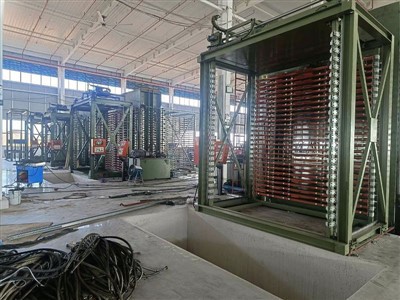
We can chat through your specific needs, walk you through test runs, answer any dumb questions (I’ve heard them all, trust me), and help you figure out if upgrading your edger is the move you need to make. Don’t let mixed grain be the thing slowing your mill down—let’s fix that.
Double Side Gluing Machine References:
- Forest Products Laboratory. (2020). Wood Handbook: Wood as an Engineering Material. USDA Forest Service.
- Miller, J. (2022). Efficiency Gains in Lumber Processing: The Impact of Adjustable Board Edgers. Journal of Wood Products Manufacturing.
- Smith, L. (2021). Grain Direction Effects on Wood Machining: A Field Study of Small-Scale Mills. Wood Industry Quarterly.
Jiashan Changle Machinery Manufacturing Co., Ltd.
We’re well-known as one of the leading board edger manufacturers and suppliers in China, also support customized service. Please feel free to buy advanced board edger for sale here from our factory. Quality products and punctual delivery are available.
Address: Building 12, Zone A, Wanyang Innovation City, No. 23 Yucao South Road, Ganyao Town, Jiashan County, Jiaxing City, Zhejiang Province
E-mail: Changle84615620@163.com
WebSite: https://www.changlejx.com/
