If you’ve ever sat on a patio swing, driven a car down a smooth highway, or popped a flexible tape measure into a toolbox, you’ve relied on spring steel wire—even if you didn’t realize it. As someone who’s worked in the spring steel wire supply business for over 18 years, I’ve lost count of how many times shop owners, mechanical engineers, and even weekend DIYers have asked me a pretty straightforward question: “What’s the typical diameter range for spring steel wire?” Spring Steel Wire

On the surface, it seems like a simple answer. But pull back the curtain just a little, and you’ll see that diameter isn’t just a number on a spec sheet—it’s the foundation of every spring that turns wire into function. The right thickness keeps a heavy-duty truck suspension from bottoming out, makes a retractable pen click reliably 10,000 times in a row, and even holds a baby’s pacifier to a clip without snapping mid-play. Let’s break down what that range really looks like, why it matters, and how to pick the right one for your next project.
First, let’s set a baseline: spring steel wire (sometimes called music wire, though that term usually refers to high-carbon wire used for precision applications) is a steel alloy treated to have high tensile strength, good elasticity, and resistance to deformation. Unlike regular wire, it can be stretched, twisted, or bent and return to its original shape hundreds of thousands of times without breaking. That durability is non-negotiable for everything from tiny clock springs to massive industrial coil springs, and diameter is the single most important factor in how that wire performs.
Most people don’t realize that spring steel wire isn’t sold in random thicknesses. The industry follows standardized gauges and metric measurements that make it easy to compare products, even across different regions. Let’s start with the common imperial measurements, since that’s what a lot of North American customers still reference. The American Wire Gauge (AWG) system pairs with a range that starts at what we call “micro wire” and goes all the way up to heavy, industrial-grade stock. At the thin end, micro spring steel wire starts around 0.004 inches (0.1016 mm) and goes up to 0.020 inches (0.508 mm). This is the stuff you’ll find in tiny components: the spring inside a hearing aid, the click mechanism of a luxury pen, or the latch that holds a laptop screen closed. It’s so thin, you could easily fold it between your fingers if you weren’t careful, but its tensile strength means it won’t snap under the tiny, repeated pressures those parts face.
Move up the gauge scale, and you get to the mid-range that most of our commercial and industrial customers use every day. This is the sweet spot between delicate micro wire and heavy-duty stock, running from 0.021 inches (0.5334 mm) up to 0.250 inches (6.35 mm). Think about a standard garage door torsion spring, the springs inside a office chair that lets you adjust height, or the retractable tape measure spring that pulls the blade back into its housing. This range balances flexibility and strength well enough to handle thousands of cycles a year without wearing out, which is why it’s the most commonly requested size for general manufacturing, construction, and consumer goods. For example, when we fill an order for a local office furniture maker, they almost always specify wire in the 0.091-inch to 0.125-inch range (that’s AWG 19 to AWG 16) for their seat adjustment springs—thick enough to support 250 pounds of pressure, but thin enough to compress and extend smoothly every time someone sits down.
Then there’s the heavy end of the spectrum, the wire that’s built to handle massive loads. Anything over 0.250 inches (6.35 mm) falls into this category, and we’ve supplied wire up to 1.0 inch (25.4 mm) in diameter for industrial projects. This is the wire used for semi-truck suspension springs, heavy-duty construction equipment, railroad couplers, and the big coil springs that support bridges in some infrastructure projects. I remember one order a few years back for a mining equipment company that needed 0.75-inch diameter spring steel wire for their conveyor belt tension springs. Those springs have to absorb the shock of 2,000-pound chunks of rock hitting the belt every 10 seconds, 24 hours a day—so the wire couldn’t be too thin, or it would snap after a few weeks. We had to test that wire three times before it left our warehouse, because even a 0.005-inch difference in diameter can cut a spring’s load capacity by 15% or more.
Wait a second—did you notice that I mentioned both imperial (inches, AWG) and metric measurements? That’s because the global market uses both, and it’s one of the most common mistakes I see new buyers make when ordering spring steel wire. A customer from Europe might ask for 2 mm wire, and a US customer might ask for 0.0787 inches (which is exactly 2 mm), but if you mix those up, you end up with a spring that’s too thick or too thin. For example, 2 mm wire works for small to medium springs, but a 5 mm wire (0.1969 inches) is for heavier applications. This is why at our company, we always list both measurements on every product page, and our customer service team will confirm the size three times before processing an order—no one wants to build a product with springs that don’t work.
Now, it’s not just about picking a diameter. The application will dictate which end of the range you need, and there are a few key factors to keep in mind. First, load capacity: the thicker the wire, the more weight a spring can support. That’s why a 0.5 mm wire can’t be used for a car suspension spring—even if it’s made of the same high-grade spring steel, it would bend and break under the weight of a 4,000-pound vehicle. Second, cycle life: thinner wire flexes more easily, so it can handle more repeated cycles before wearing out. A 0.004-inch wire in a pen click might do 100,000 clicks without a problem, but if you used a 0.250-inch wire there, it would be too stiff to click at all. Third, space constraints: if you’re building a tiny component like a watch part, you can’t use a wire that’s 0.5 inches thick—it wouldn’t fit inside the casing. That’s why micro wire is essential for high-precision electronics and medical devices.
I’ve seen too many projects go wrong because someone picked the wrong diameter. A few years back, we had a customer who was building custom bird feeders with spring-loaded seed dispensers. They ordered 0.030-inch wire thinking it would be strong enough, but by the time they tested their prototype, the seed hopper was too heavy, and the wire stretched so much it wouldn’t close properly. We suggested 0.062-inch wire, which is thicker but still thin enough to work inside the small feeder housing, and that fixed the problem overnight. It’s a small adjustment, but it made all the difference.
Another common question we get: is there a “standard” diameter that works for most springs? The short answer is no, but if you’re just starting out and testing designs, the mid-range 0.062-inch to 0.125-inch is the most versatile. We keep that size in stock year-round because customers use it for so many things: appliance parts, small garage door springs, toy components, and even craft projects. If you’re working on a DIY project or a small manufacturing run, that’s a safe bet to avoid mistakes.
It’s also worth noting that while we’ve outlined the typical range here, spring steel wire can be custom-made to almost any diameter if a project calls for it. We’ve made wire as thin as 0.002 inches for medical stents, and as thick as 1.5 inches for offshore oil rig equipment. The key is working with a supplier that can guide you through the trade-offs: custom sizes might take a few extra days to produce, but they’re worth it if you can’t find an off-the-shelf size that fits your needs.
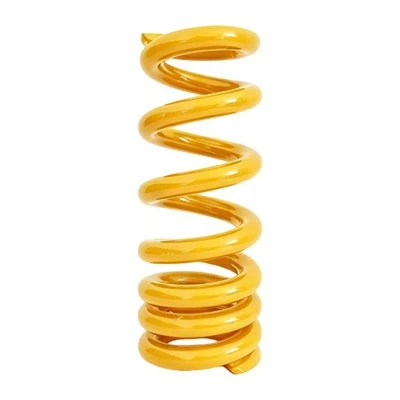
At the end of the day, understanding the diameter range of spring steel wire is all about matching the wire to the job. Whether you’re a small business owner building custom furniture, an engineer designing industrial machinery, or a hobbyist working on a home project, the right thickness will make your spring work reliably, last longer, and avoid costly mistakes. If you’re not sure what size you need, don’t guess—that’s why we’re here. We’ve helped thousands of customers pick the right diameter, test prototypes, and adjust their designs to get exactly the performance they need.
Spring Steel Wire If you have questions about spring steel wire diameters, load capacity, or custom orders, our team is ready to help. We work with customers across industries, from small local shops to large multinational companies, and we prioritize quality and clear communication every step of the way. Reach out to us to discuss your project, and we’ll help you find the perfect spring steel wire for your needs.
References
- American Society for Testing and Materials. (2020). Standard Specification for Steel Wire, Spring Quality. ASTM International.
- Spring Manufacturers Institute. (2021). Spring Design Handbook: Material and Dimensional Standards. Spring Manufacturers Institute.
- Machinery’s Handbook. (31st ed.). Industrial Press. (2020). Section on Wire Gauges and Spring Material Specifications.
- International Organization for Standardization. (2019). Metallic Materials for Springs – Part 1: Steel Wire. ISO 10243-1:2019.
Baoding Zhongxin Spring Manufacturing Co., Ltd.
We’re known as one of the most reliable spring steel wire manufacturers and suppliers in China. With abundant experience, we warmly welcome you to buy durable spring steel wire made in China here and get pricelist from our factory. All customized springs are with high quality and competitive price.
Address: West Side, 200 Meters North of Chenzhuang Gas Station, Pangkou Town, Gaoyang County, Baoding City, Hebei Province, P.R. China
E-mail: 13292951555@163.com
WebSite: https://www.zhongxinind.com/
