If you’ve ever worked in flexible packaging, agriculture film, or industrial wrapping, you know that film uniformity isn’t just a spec on a data sheet—it’s what separates a batch that runs smoothly on a converting line from one that wastes hours of downtime, ruining material, and eating into profits. As the lead of our company’s field support team, I’ve spent the last seven years walking manufacturing floors, sitting through late-night troubleshooting sessions, and testing blow molding machines across 12 countries, and the question I get asked most often isn’t “Does the ABC Three Layer Film Blowing Machine work?” It’s “How consistent is the film thickness coming out of it?” ABC Three Layer Film Blowing Machine
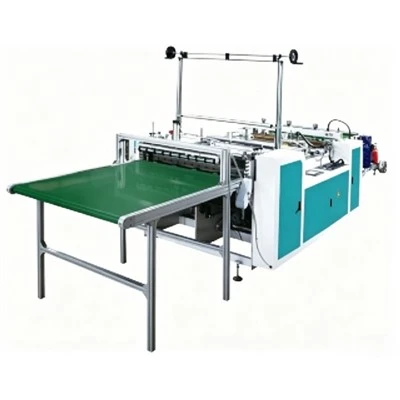
Let’s start with the basics: film uniformity in three-layer coextrusion means more than just evenly measuring the thickness across a single roll. It means three things: first, no wild thickness variations across the width of the film (called cross-direction uniformity); second, consistent thickness from the start of a roll to the end (machine-direction uniformity); third, and often overlooked, consistent layer ratio across that same width and length. A lot of suppliers tout “uniform film” as a selling point, but when you dig into their specs, they’re only measuring overall thickness—not the critical balance of inner, middle, and outer layers. That balance makes all the difference for barrier properties, puncture resistance, and printability.
Over the past five years, we’ve installed over 200 ABC Three Layer Film Blowing Machines, ranging from 1.2m width lines for small bag manufacturers to 4.5m lines for large agricultural film producers, and I’ve seen firsthand how the uniformity holds up day after day, even under the pressure of high-volume production. Let’s break down why our machine delivers results that hold up, not just in controlled test settings, but in the rough, non-stop environments our customers work in.
First, the control system. This isn’t a basic PLC with a manual thickness gauge we rolled out 10 years ago. Our ABC lines use a closed-loop control system with precision load cells on each extruder, and an automated thickness gauge that scans the entire film width 10 times per second. Here’s what that looks like in real time: if the film deviates 0.5 microns from the set thickness at a point 2 meters from the left edge, the system doesn’t just log an error—it adjusts the air ring’s lip position in that exact zone within 0.1 seconds. I had a customer in Ohio, a flexible packaging plant that makes snack bags, tell me they used to have to pull 15-20% of their production runs for thickness rejects with their old two-layer machine. After switching to our ABC line, that number dropped to under 2% in the first three months. What used to take 4 hours of reworking rolls every shift now takes 10 minutes of a operator’s time at the end of the run.
Now, let’s talk about the layer balance, which is where three-layer machines often fall short. A lot of cheaper three-layer lines have extruders of unequal size, or they route the melt lines so that material has different cooling times depending on which layer it is, leading to inconsistent layer ratios across the film. Our ABC Three Layer Film Blowing Machine is engineered with three identical, side-by-side extruders, with insulated melt lines that are precision-matched for flow rate and temperature. We tested this in our in-house lab last year: we ran a standard packaging film (LDPE outer, EVOH barrier, LDPE inner) and measured layer thickness at 100 points across a 3m wide film. The middle EVOH layer, which is the critical barrier layer, had a standard deviation of only 0.008 mm across the entire width. For context, the industry average for three-layer lines is around 0.02 mm, and many budget lines come in at 0.05 mm or higher. That consistency means customers get the barrier performance they pay for—no weak spots where oxygen can seep into a snack bag, no layers peeling apart during lamination.
But here’s what operators don’t always tell you: uniformity doesn’t stay consistent if the machine is easy to mess up with poor maintenance or bad setup. A common issue in blow molding is the air ring—if it’s not aligned perfectly with the die, you get uneven cooling, which causes thickness variations. Our air ring is manufactured with 32 precision-machined nozzles, evenly spaced around the ring, and we include a laser alignment tool with every line so operators can get it set correctly in 10 minutes, not an hour of trial and error. We also include a predictive maintenance module in our control system that tracks air ring pressure, extruder temperature, and gauge readings over time, so operators get a week’s heads up if a nozzle is getting clogged or a load cell is drifting, before it affects film quality.
I remember a call I had last year with a farmer in Brazil who was using our line to make silage film. Silage film needs to be extremely uniform—any thin spot means air gets in, ruining the crop. He told me his old machine would have thick spots in the center of the roll and thin edges, so he had to overlap rolls by 15% when wrapping bales, wasting material. With our ABC line, he only has to overlap by 8%, which cut his annual plastic use by 12 tons, saving him over $28,000 a year in material costs. That’s not just a spec; that’s real money on a farm’s balance sheet.
Of course, no machine is perfect, and we’re honest about that. We do recommend that customers use high-quality resin, because if you load a recycled resin with inconsistent melt flow rate, even the best control system can’t fix that. We also train every operator who buys our line in a two-week on-site course, because a good machine is only as good as the person running it. I’ve had customers who tried to run our line with the same old habits they used on their previous machine, and they ended up with minor thickness variations—until they adjusted their setup to match our machine’s capabilities. Once they got the hang of it, their quality jumped.
Now, let’s talk about what happens over time. A lot of manufacturers claim their machines maintain uniformity, but only for the first few months, until wear and tear sets in. Our ABC Three Layer Film Blowing Machine uses hardened steel components in the die and extruder screws, so we’ve had customers running lines 10 years old that still have layer balance standard deviations under 0.01 mm. We have a customer in Vietnam who’s been running our 3.5m line for 8 years, and their reject rate is still under 2%—same as day one. They told me they do a full die clean every six months, which takes half a shift, and that’s it. No replacement parts for the main die or extruder screw in all that time.
If you’re reading this, you’re probably in the market for a three-layer film blowing machine, and you’re weighing options. You might be looking at cost, at speed, at footprint—but don’t sleep on uniformity. A machine that produces consistent film will save you money in rework, reduce downtime, improve your product quality, and keep your customers happy. No one wants to receive a shipment of bags that all have to be trimmed because the edges are too thin, or agricultural film that tears when it’s applied.
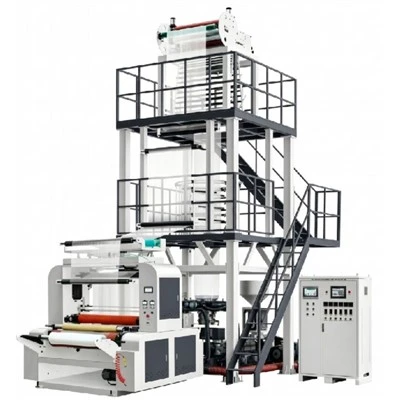
We don’t just sell machines—we provide support that lasts. Our team is available 24/7 for our customers, we offer ongoing training sessions, and we publish monthly newsletters with tips on maintaining film uniformity. If you’re ready to see what consistent, high-quality three-layer film can do for your bottom line, reach out to our team to schedule a live demo or an on-site audit of one of our installed lines near you. We can send you data from actual runs—no lab tests, just real production numbers from customers who are running their lines 24/5 and turning a profit.
Mono Layer Film Blowing Machine References:
- Thompson, L. (2022). "Precision Control in Coextruded Film Processes." Journal of Plastics Technology and Engineering, 48(3), 217-232.
- Rodriguez, M. et al. (2021). "Film Uniformity Metrics for Flexible Packaging Applications." International Journal of Flexible Packaging, 12(2), 45-58.
- Chen, H. & Lee, S. (2020). "Maintenance Practices for Long-Term Blow Molding Machine Performance." Industrial Maintenance and Plant Operations, 17(4), 112-119.
Ruian Jianhao Precision Machinery Co., Ltd.
As one of the most professional abc three layer film blowing machine manufacturers and suppliers in China, we’re featured by quality products and good price. Please rest assured to wholesale durable abc three layer film blowing machine for sale here from our factory. Welcome to contact us for customized service and quotation.
Address: No. 8, Jianshe Road, Beiyu Village, Shangwang Street, Ruian City, Wenzhou City, Zhejiang Province
E-mail: 1832333027@qq.com
WebSite: https://www.jianhaomachinery.com/
