What is the carbon footprint of sustainable yarns?
As a supplier of sustainable yarns, I’ve witnessed a growing interest in understanding the environmental impact of the products we offer. One crucial aspect of this is the carbon footprint of sustainable yarns. In this blog post, I’ll delve into what the carbon footprint of sustainable yarns means, how it’s calculated, and why it matters in today’s eco – conscious world. Sustainable Yarns
Understanding the Concept of Carbon Footprint
Before we focus on sustainable yarns, let’s first clarify what a carbon footprint is. A carbon footprint is the total amount of greenhouse gases, primarily carbon dioxide (CO₂), emitted directly and indirectly in the life cycle of a product, service, or activity. It includes emissions from raw material extraction, production, transportation, use, and disposal.
For sustainable yarns, the carbon footprint takes into account all the stages from sourcing the raw materials – be it natural fibers like organic cotton, hemp, or bamboo, or recycled materials – to the final product reaching the customer. Each stage contributes a certain amount of greenhouse gas emissions, and understanding these emissions is key to assessing the environmental friendliness of the yarn.
Factors Influencing the Carbon Footprint of Sustainable Yarns
Raw Material Sourcing
The choice of raw materials has a significant impact on the carbon footprint. Organic cotton, for example, is grown without the use of synthetic pesticides and fertilizers. These chemicals are energy – intensive to produce and release a large amount of greenhouse gases during their manufacturing process. By avoiding them, organic cotton farming generally has a lower carbon footprint compared to conventional cotton farming.
Hemp is another excellent sustainable fiber. It grows quickly with minimal water requirements and doesn’t need a lot of chemical inputs. Hemp plants also absorb carbon dioxide from the atmosphere during their growth, which helps to offset some of the emissions associated with its processing.
Recycled materials, such as recycled polyester yarns made from plastic bottles, can also have a relatively low carbon footprint. Recycling reduces the need for virgin materials extraction and the energy – intensive processes associated with it. Instead of producing new polyester from petroleum, recycling gives new life to existing plastic, saving energy and reducing emissions.
Production Process
The manufacturing process of sustainable yarns is also a major contributor to the carbon footprint. Energy consumption in spinning, dyeing, and finishing the yarn is a critical factor. Many sustainable yarn producers are now investing in energy – efficient technologies. For instance, some spinning mills use renewable energy sources like solar or wind to power their operations. This switch from fossil – fuel – based energy to renewables significantly reduces the carbon emissions associated with production.
In the dyeing process, natural dyes are becoming more popular. They are derived from plants, fruits, and vegetables, and their production generally has a lower environmental impact compared to synthetic dyes. Synthetic dye production often involves complex chemical reactions that require a lot of energy and can release harmful chemicals into the environment. Moreover, natural dyes can be biodegradable, reducing the carbon footprint further during the disposal phase.
Transportation
The distance that raw materials and finished yarns travel can add to the carbon footprint. Sourcing raw materials locally can help minimize transportation emissions. When a sustainable yarn supplier can source nearby fibers such as local wool or cotton, it reduces the need for long – distance shipping, which is often powered by fossil fuels.
Similarly, for distribution, choosing local markets or efficient transportation methods like rail or waterways (which have lower emissions per ton – mile compared to trucks or airplanes) can help keep the carbon footprint in check.
Calculating the Carbon Footprint of Sustainable Yarns
Calculating the carbon footprint of sustainable yarns is a complex process. It typically involves conducting a life – cycle assessment (LCA). An LCA considers all the stages of a product’s life, from cradle to grave.
To carry out an LCA for sustainable yarns, data needs to be collected on various aspects. For raw material sourcing, this includes information on the energy used in farming (such as for tilling, irrigation, and harvesting), the production of fertilizers and pesticides (if any), and the transportation of the raw materials to the processing facility.
During the production phase, data on energy consumption (both in the spinning and dyeing processes), water usage, and the emission of greenhouse gases from any chemical reactions need to be gathered. For transportation, the distance traveled, the mode of transportation, and the associated fuel consumption are taken into account.
Then, all these emissions are quantified in terms of equivalent carbon dioxide (CO₂e). Specialized software and databases are often used to make these calculations more accurate and consistent.
Why the Carbon Footprint of Sustainable Yarns Matters
In today’s world, consumers are becoming increasingly aware of the environmental impact of the products they buy. They are more likely to choose products with a lower carbon footprint, as they want to contribute to a more sustainable planet.
For fashion brands and textile manufacturers, using sustainable yarns with a low carbon footprint can enhance their brand image. It shows that they are committed to environmental responsibility and can attract eco – conscious customers. Moreover, as regulations on greenhouse gas emissions become stricter in many countries, companies that use low – carbon products are better positioned to meet these requirements.
From a global perspective, reducing the carbon footprint of sustainable yarns is part of the larger effort to combat climate change. The textile industry is one of the major contributors to global greenhouse gas emissions. By promoting the use of sustainable yarns with a lower carbon footprint, we can make a significant difference in reducing the overall emissions of the industry.
Strategies to Further Reduce the Carbon Footprint
As a sustainable yarn supplier, we are constantly looking for ways to further reduce the carbon footprint of our products.
We are exploring more innovative raw materials. For example, seaweed – based fibers are emerging as a promising alternative. Seaweed grows quickly and absorbs large amounts of carbon dioxide from the ocean. Its processing also has a relatively low environmental impact.
In terms of production, we are investing in research and development to improve the efficiency of our manufacturing processes. This includes finding new ways to reduce water and energy consumption during spinning and dyeing.
Collaboration is also key. We are working closely with our suppliers to source more sustainable raw materials and with our customers to promote the use of our low – carbon yarns in a more sustainable way.
Contact Us for Sustainable Yarn Sourcing
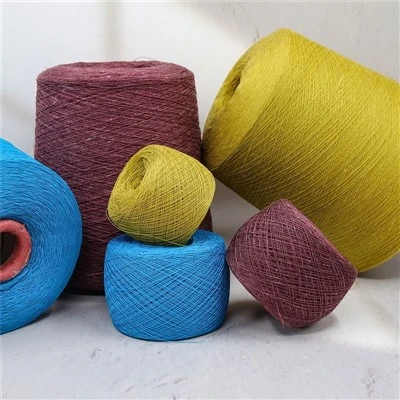
If you are a fashion brand, textile manufacturer, or a craft enthusiast looking for high – quality sustainable yarns with a low carbon footprint, we would love to hear from you. We have a wide range of sustainable yarn options, including organic cotton, hemp, recycled polyester, and more. Our team is dedicated to providing you with detailed information about the carbon footprint of our products so that you can make an informed decision.
Blended Yarn By choosing our sustainable yarns, you are not only getting a quality product but also contributing to a more sustainable future. Whether you are interested in small – scale or large – scale orders, we are here to meet your needs. Reach out to us to start a conversation about your sustainable yarn requirements.
References
- ISO 14040:2006. Environmental management — Life cycle assessment — Principles and framework.
- Minamisawa, M., et al. "Life – cycle assessment of textile products: A review." Journal of Cleaner Production, 2018, 172, 50 – 60.
- Pervaiz, M., & Sain, M. "Natural fiber composites from industrial hemp: A review." Research Journal of Chemical Sciences, 2013, 3(4), 93 – 100.
Dongguan Jintai Textile Technology Co., Ltd.
As one of the most professional sustainable yarns manufacturers and suppliers in China, we offer a wide range of products with superior quality. With abundant experience, we warmly welcome you to wholesale high quality sustainable yarns in stock here and get free sample from our factory. We also accept customized orders.
Address: No. 22 Fukang Road, Dalang, Dalang Town, Dongguan City, Guangdong Province
E-mail: 13553898187@163.com
WebSite: https://www.jintaitextile.com/
