Quality control in titanium forging is a critical aspect of ensuring the production of high – performance, reliable, and safe titanium forged products. As a titanium forging supplier, I understand firsthand the importance of maintaining strict quality control measures throughout the entire forging process. In this blog, I will delve into what quality control in titanium forging entails, the key steps involved, and why it is so crucial for our business and our customers. Titanium Forging
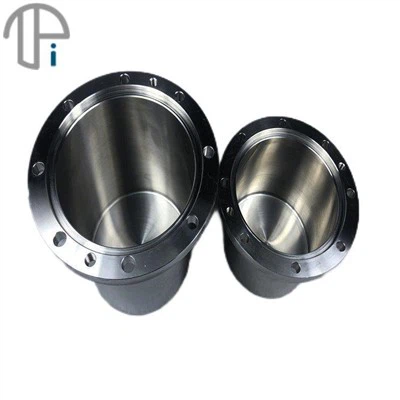
Understanding Titanium Forging and Its Significance
Titanium forging is a manufacturing process where titanium is heated to a specific temperature and then shaped using compressive forces. Titanium is an ideal material for many industries due to its high strength – to – weight ratio, excellent corrosion resistance, and biocompatibility. Industries such as aerospace, medical, and automotive rely heavily on titanium forged parts, including turbine blades, engine components, and orthopedic implants.
However, the properties of titanium that make it so desirable also present challenges during the forging process. Titanium has a relatively narrow forging temperature range, and improper handling can lead to issues such as cracking, poor grain structure, and reduced mechanical properties. This is where quality control comes in.
Key Elements of Quality Control in Titanium Forging
Raw Material Inspection
The quality control process in titanium forging begins with the inspection of raw materials. We source titanium from trusted suppliers and subject each batch to a series of tests. Chemical analysis is performed to ensure that the titanium meets the specified chemical composition. This includes checking the percentages of elements such as aluminum, vanadium, iron, and oxygen, which can significantly affect the properties of the final forged product.
Physical tests are also conducted. We measure the density and hardness of the raw titanium to ensure they fall within the acceptable range. Additionally, we use ultrasonic testing and magnetic particle inspection to detect any internal or surface defects in the raw material. Any batch that fails these inspections is rejected, as starting with sub – standard raw materials will inevitably lead to sub – standard forged parts.
Forging Process Monitoring
During the forging process, we closely monitor several parameters to ensure quality. Temperature is one of the most critical factors. We use infrared thermometers and thermal imaging cameras to accurately measure the temperature of the titanium billet at different stages of forging. Maintaining the correct forging temperature is essential for achieving the desired grain structure and mechanical properties. If the temperature is too high, the titanium may oxidize or develop a coarse grain structure, which reduces strength. If the temperature is too low, cracking may occur due to excessive stress.
We also monitor the forging pressure and deformation rate. The forging equipment is calibrated regularly to ensure that the applied pressure is consistent and within the specified range. The deformation rate, which is the speed at which the titanium is shaped, is carefully controlled. A too – high deformation rate can cause cracking, while a too – low rate may result in an uneven grain structure.
In addition to these physical parameters, we also pay attention to the lubrication used during forging. Proper lubrication reduces friction between the titanium and the forging dies, which helps in achieving a smooth surface finish and preventing damage to the dies. We test different lubricants to ensure they are suitable for titanium forging and do not leave any harmful residues on the forged parts.
Heat Treatment Quality Control
Heat treatment is a crucial step in titanium forging as it helps to improve the mechanical properties of the forged parts. After forging, the parts are subjected to processes such as annealing, solution treatment, and aging.
During heat treatment, temperature and time are the two main parameters that need to be controlled. We use precision temperature controllers and furnaces with uniform heating capabilities. The parts are heated to the exact temperature required for the specific heat treatment process and held at that temperature for the recommended duration. Any deviation from the specified temperature and time can lead to changes in the microstructure of the titanium, affecting its strength, hardness, and ductility.
We also perform post – heat – treatment inspections. This includes hardness testing, which helps us verify that the heat treatment has achieved the desired hardness. Microstructure analysis is also carried out using optical microscopy and electron microscopy. By examining the grain size, phase distribution, and precipitation in the titanium, we can confirm that the heat treatment has been successful.
Machining and Finishing Quality Control
After forging and heat treatment, the titanium parts often require machining to achieve the final dimensions and surface finish. Quality control during machining involves ensuring accurate dimensional tolerances. We use advanced measuring tools such as coordinate measuring machines (CMMs) to verify that the machined parts meet the design specifications. These machines can measure the length, width, height, and other geometric features of the parts with high precision.
Surface finish is another important aspect. We use surface roughness testers to measure the smoothness of the machined surfaces. A proper surface finish not only improves the appearance of the parts but also affects their functionality. For example, in medical implants, a smooth surface can reduce friction and the risk of tissue damage.
In addition to dimensional and surface finish controls, we also check for any machining – induced defects such as burrs, chips, or cracks. These defects can weaken the parts and cause premature failure.
Final Inspection and Testing
Before the titanium forged parts are shipped to the customers, they undergo a final inspection. This comprehensive inspection includes a visual examination to check for surface flaws, scratches, or discoloration. We also perform a final dimensional check to ensure that all the parts meet the customer’s specifications.
In addition to these non – destructive tests, we may also conduct destructive tests on a sample of the parts. Tensile tests are used to measure the strength and ductility of the titanium. Impact tests can evaluate the material’s resistance to sudden loads. These tests provide valuable data on the mechanical properties of the forged parts and ensure that they meet the industry standards and the customer’s requirements.
Why Quality Control in Titanium Forging Matters
For our company as a titanium forging supplier, quality control is not just a set of procedures; it is the foundation of our business. High – quality titanium forged parts are essential for the safety and performance of our customers’ products. In the aerospace industry, for example, a single faulty titanium component can lead to catastrophic consequences. By ensuring strict quality control, we help our customers avoid such risks and maintain their reputation in the market.
Quality control also helps us build long – term relationships with our customers. When customers receive consistent, high – quality products, they are more likely to return for future orders. It also allows us to compete effectively in the global market. In an industry where quality is highly valued, our commitment to quality control gives us a competitive edge.
Conclusion and Call to Action

In conclusion, quality control in titanium forging is a multi – step, comprehensive process that involves careful inspection and monitoring at every stage, from raw material selection to final product testing. By adhering to strict quality control measures, we can produce titanium forged parts that meet the highest standards of quality and performance.
Seamless Titanium Tube If you are in the market for high – quality titanium forged products, we invite you to reach out to us for a procurement discussion. Our team of experts is ready to work with you to understand your specific requirements and provide customized solutions. Whether you need parts for aerospace, medical, or any other industry, we have the expertise and the quality control processes in place to deliver the products you need.
References
- "Titanium: A Technical Guide" by John R. Davis.
- "Metal Forming: Theory and Practice" by P.C. Kalpakjian and S. R. Schmid.
- Industry standards and specifications related to titanium forging, such as ASTM standards.
Baoji Top Titanium Industry Co., Ltd.
As one of the most professional titanium forging manufacturers and suppliers in China, we’re featured by quality products and good price. Please rest assured to buy bulk titanium forging in stock here and get quotation from our factory. Customized orders are welcome.
Address: No. 2, South Section Of Phoenix 2nd Road,High-Tech Zone, Baoji,Shaanxi, China (Mainland)
E-mail: sales@bjtopti.com
WebSite: https://www.china-topti.com/
